
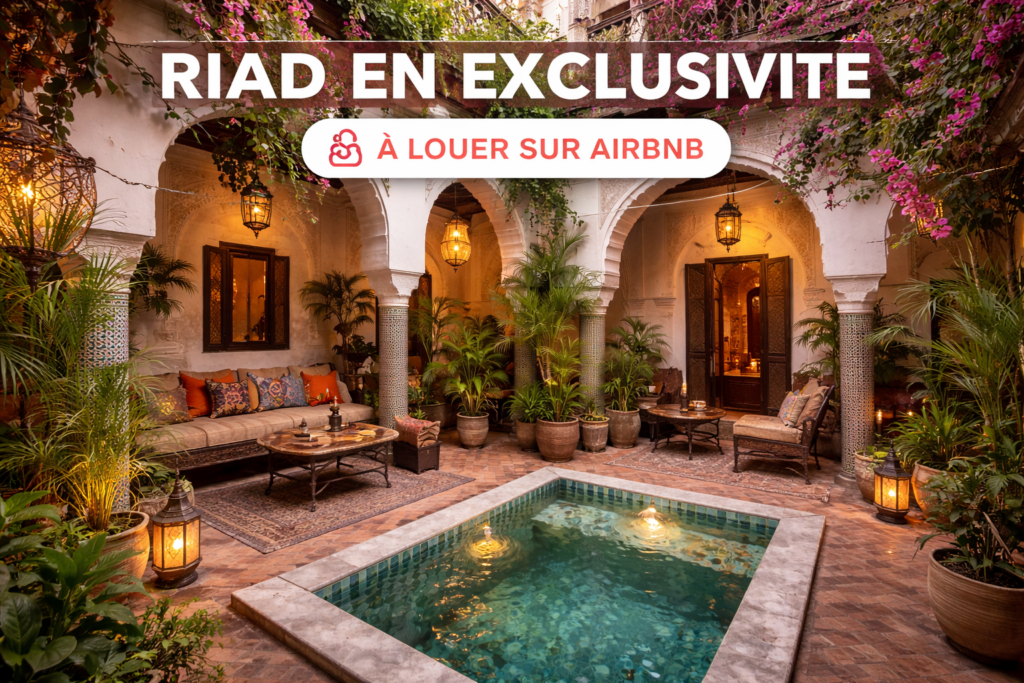
Short-term tourist rentals in Morocco, particularly in Marrakech, have experienced remarkable growth in recent years. Riads in the medina, charming apartments, and renovated houses are now widely offered on platforms such as Airbnb and Booking, attracting an international clientele seeking authenticity.
This rapid transformation of the market long preceded the regulatory framework. For several years, investors, owners, and professionals had to navigate an uncertain legal environment, often fueled by speculation, rumors, and sometimes contradictory interpretations.
The publication of Decree No. 2-23-441 of July 13, 2023, issued for the implementation of certain provisions of Law No. 80-14 relating to tourist establishments, represents an important step in structuring this sector.
This article presents a 2026 interpretation of that decree, highlighting a point that is frequently misunderstood: the pragmatic approach adopted by the legislator regarding the frequent absence of occupancy permits in historic buildings, particularly in the medinas.
A long-awaited regulatory framework for short-term rentals in Morocco
The rapid success of short-term rental platforms has significantly reshaped the tourism accommodation landscape in several Moroccan cities, especially Marrakech.
Today’s travelers increasingly seek:
- private accommodations
- immersive local experiences
- authentic stays in historic medinas
In response, Moroccan authorities have moved to structure and regulate this rapidly expanding sector, in order to ensure greater safety and transparency.
Decree No. 2-23-441, published in the Official Bulletin on August 7, 2023, establishes the first regulatory framework governing:
- home-based accommodation
- alternative tourist lodging
- short-term rental operations
The documents required to operate a property as tourist accommodation
The decree outlines the elements required to submit an application for an operating authorization.
The application file must notably include:
- the official application form, to be defined by a joint order from the Ministry of Interior and the Ministry of Tourism
- a copy of the national electronic identity card of the accommodation operator
- an insurance contract, as required under Article 34 of Law No. 80-14
- photographs of the rooms and common areas offered for rental
- an “Permis d’Habiter”, or an attestation issued by a specialized engineer
- a signed operational specification document
These requirements aim to ensure safety standards and minimum compliance for properties offered to tourists.
The key point of the decree: a pragmatic solution for historic buildings
One of the most important – and often misunderstood – aspects of the decree concerns the “Permis d’Habiter” requirement.
In Morocco’s historic medinas, particularly in Marrakech, many riads and traditional homes were built long before modern administrative construction permits existed.
Exiger systématiquement ce document aurait donc rendu impossible l’exploitation touristique de nombreux bâtiments patrimoniaux.
The legislator therefore adopted a pragmatic and realistic solution.
The engineer’s attestation: a deliberate alternative introduced by the legislator
The decree explicitly states that in the absence of an occupancy permit, an attestation issued by a specialized engineer may be used to support the application.
This attestation must confirm that the building meets requirements related to:
- structural stability
- general safety
- fire prevention standards
This provision is not a minor technical detail. On the contrary, it reflects a deliberate legislative choice, intended to adapt the regulatory framework to the architectural realities of Morocco’s historic medinas.
In cities such as Marrakech, Fez, or Essaouira, many renovated riads simply do not have occupancy permits because their construction predates modern administrative regulations.
The decree therefore acknowledges this reality and provides a practical solution through the technical certification of a qualified engineer.
For investors considering the acquisition of a riad intended for tourist rental, this point is particularly important.
A regulatory framework still awaiting full implementation
However, an important clarification must be made for investors.
At the time of writing, the detailed implementation orders specifying the operating specifications have not yet been published.
These documents are necessary to finalize administrative procedures and enable the effective issuance of operating authorizations.
In practice:
- the legal framework exists
- but the administrative tools required for its application are still pending
According to several stakeholders in the tourism and real-estate sectors, the publication of these implementation texts is expected in the near future.
Once issued, they should further contribute to the structuring and professionalization of the market.
A positive signal for real estate investment in Marrakech
For investors, regulatory clarity generally represents a positive signal.
Legal visibility helps to:
- secure investment projects
- professionalize tourist operations
- reinforce the credibility of the Moroccan market among international investors
In Marrakech, where riads and guesthouses represent a significant share of the tourism accommodation supply, this regulatory evolution is likely to strengthen the attractiveness of the local real-estate market.
Investing in a riad: the importance of professional guidance
Within this evolving regulatory context, one fact remains essential: each real-estate project must be carefully analyzed.
The market currently attracts many investors, but it also generates a large amount of inaccurate or simplified information, often repeated without proper verification.
Before acquiring a riad intended for tourist use, several aspects should be thoroughly reviewed:
- legal status of the property (titled property, melkia, requisition status)
- architectural configuration
- potential for tourist operation
- technical and safety compliance
Relying solely on market rumors or inexperienced intermediaries can lead to costly mistakes.
Working with experienced professionals who truly understand the medina real-estate market allows investors to approach such projects with clarity and confidence.
At Atlasimmobilier, we have been assisting investors for more than 25 years in Marrakech and Essaouira, particularly with the acquisition of riads, guesthouses, and properties with strong tourism potential.
Conclusion: a pragmatic interpretation of a structuring decree
Decree No. 2-23-441 represents a major step toward regulating short-term tourist rentals in Morocco.
A careful reading of the text shows that the legislator chose a pragmatic approach, taking into account the specific realities of Morocco’s historic architectural heritage.
The possibility of replacing the occupancy permit with an engineer’s attestation in certain cases clearly illustrates this intention to adapt the regulation to the reality of historic medina housing.
In a dynamic market such as Marrakech, understanding this regulatory framework remains essential for securing sustainable and well-informed real-estate investments.