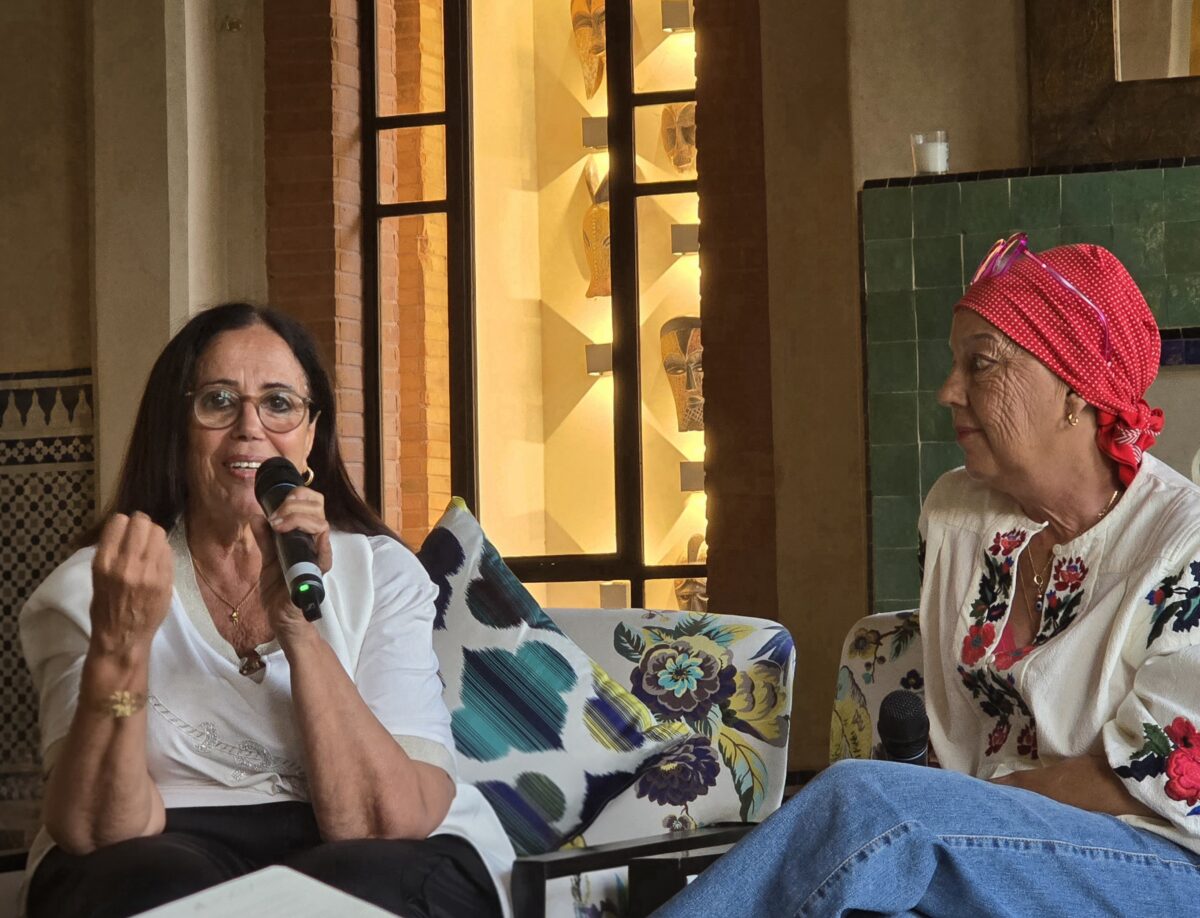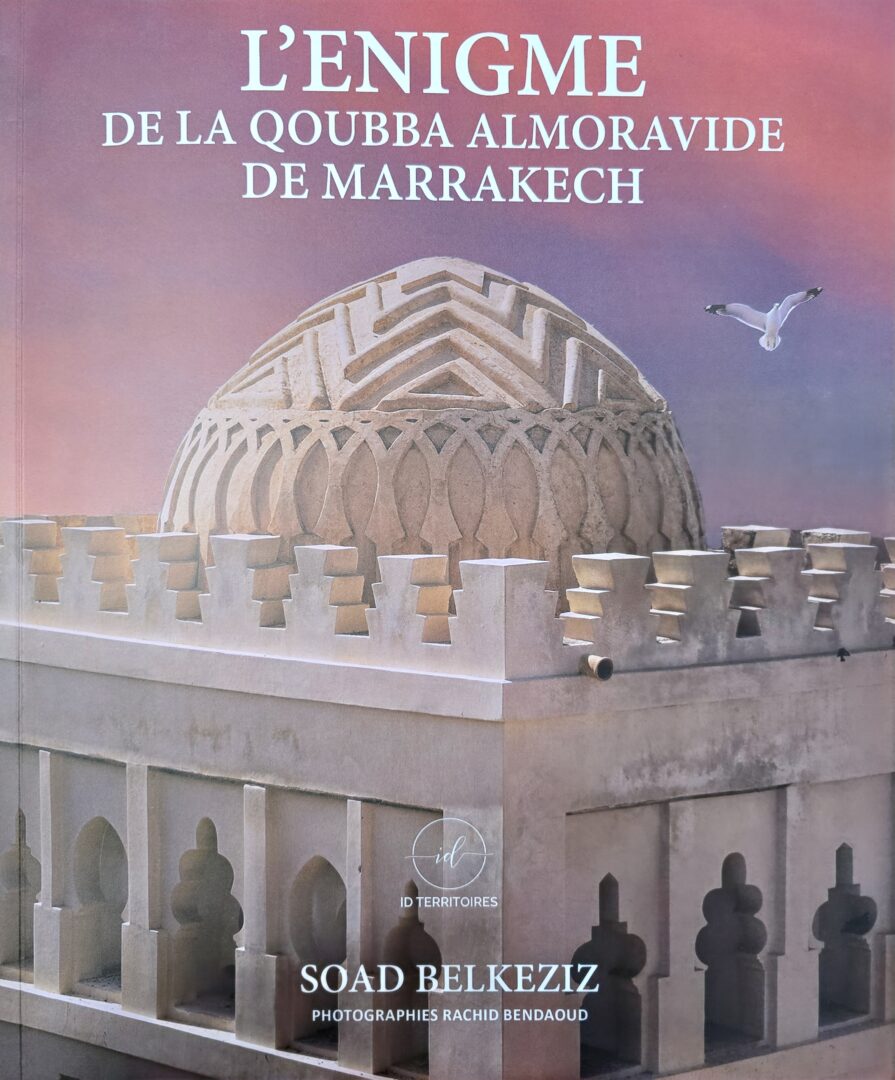
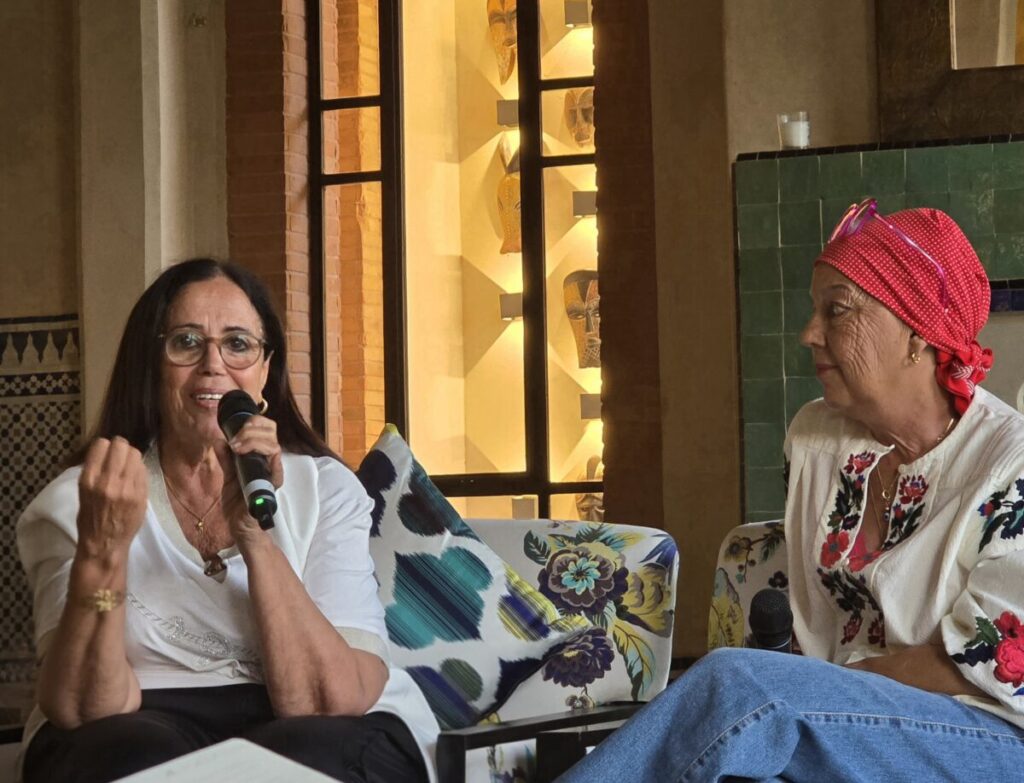
Atlasimmobilier had the honour of taking part in the presentation of Soad Belkeziz’s latest book, The Enigma of the Almoravid Qoubba of Marrakech, during an event dedicated by Valérie Tazi to the promotion of Morocco’s architectural heritage. An architect, urban planner, geographer and passionate writer, Soad Belkeziz offers in this work a unique reading of one of the medina’s most intriguing monuments: the Almoravid Qoubba, a rare 12th-century vestige.
An Essential Rediscovery of Almoravid Heritage
Long buried beneath rubble, the Almoravid Qoubba was rediscovered in 1950. Located near the Ben Youssef Mosque, it stands as one of the last remaining visible examples of Almoravid architecture, dating from a period when Marrakech was emerging as the capital of an empire stretching from the Sahara to al-Andalus.
In the first chapter, The Almoravid Qoubba in Its Geographical, Historical, Religious and Hydraulic Context, the author offers a rigorous exploration of the spiritual, political and technical world of the city during the era of Youssef Ben Tachfin.
This chapter highlights the fundamental role of water in the urban and spiritual design of Marrakech. By intertwining urban planning, religion and hydraulic engineering, Soad Belkeziz puts forward a bold hypothesis: the Qoubba was not an isolated structure but an integral part of the original religious and hydraulic complex, likely located within the courtyard of the mosque founded by Youssef Ben Tachfin. The monument would have been built directly beside an ablution basin fed by the famous khettaras, and may have embodied a universal spiritual symbol comparable to the sacred Zamzam spring in Mecca.
An Interdisciplinary Perspective in the Service of Historical Truth
Soad Belkeziz adopts an interdisciplinary approach, blending archaeology, architecture, history, urban planning and spirituality to question the contradictions of historical memory. How can we explain that Youssef Ben Tachfin, founder of Marrakech and a visionary builder, is given so little credit by chroniclers for his architectural achievements? And why was the Qoubba preserved when so many Almoravid structures were destroyed by the Almohads?
Through a comparative analysis of sources, materials and construction systems, the author brings renewed attention to a dynasty long overlooked and advocates for the restoration of a heritage essential to Morocco’s history.
A Committed Work, a Call to Protect Heritage
The book, available in leading bookstores — including at the Jaal Riad Resort boutique — goes beyond a contextual analysis of the Almoravid Qoubba. It offers an in-depth reflection on the many dimensions of this exceptional monument.
Soad Belkeziz shows how, beyond its architectural function, the Qoubba becomes a point of convergence between spirituality and science, where built spaces express a worldview rooted in the sacred. She also highlights the innovative scope of the techniques employed, which anticipated certain aspects of Western Islamic architecture long before they became widespread. Finally, the author explores the richness of the interior decoration, revealing a subtle tension between locally inspired austerity and Andalusian floral refinement — a testament to the artistic dialogue between the shores of the Maghreb and Muslim Spain.
A Must-Read for Lovers of Marrakech and Its History
With this book, Soad Belkeziz continues her commitment to the preservation and enhancement of Moroccan heritage. She advocates for the Almoravid Qoubba to be listed as a UNESCO World Heritage Site and calls for new excavations and research to deepen our understanding of this foundational period.
Atlasimmobilier, a long-established player in Marrakech and Essaouira, wholeheartedly supports this approach that links architecture, memory and transmission. To understand the city is also to understand its foundations, its symbols and the ingenuity of those who built it.